
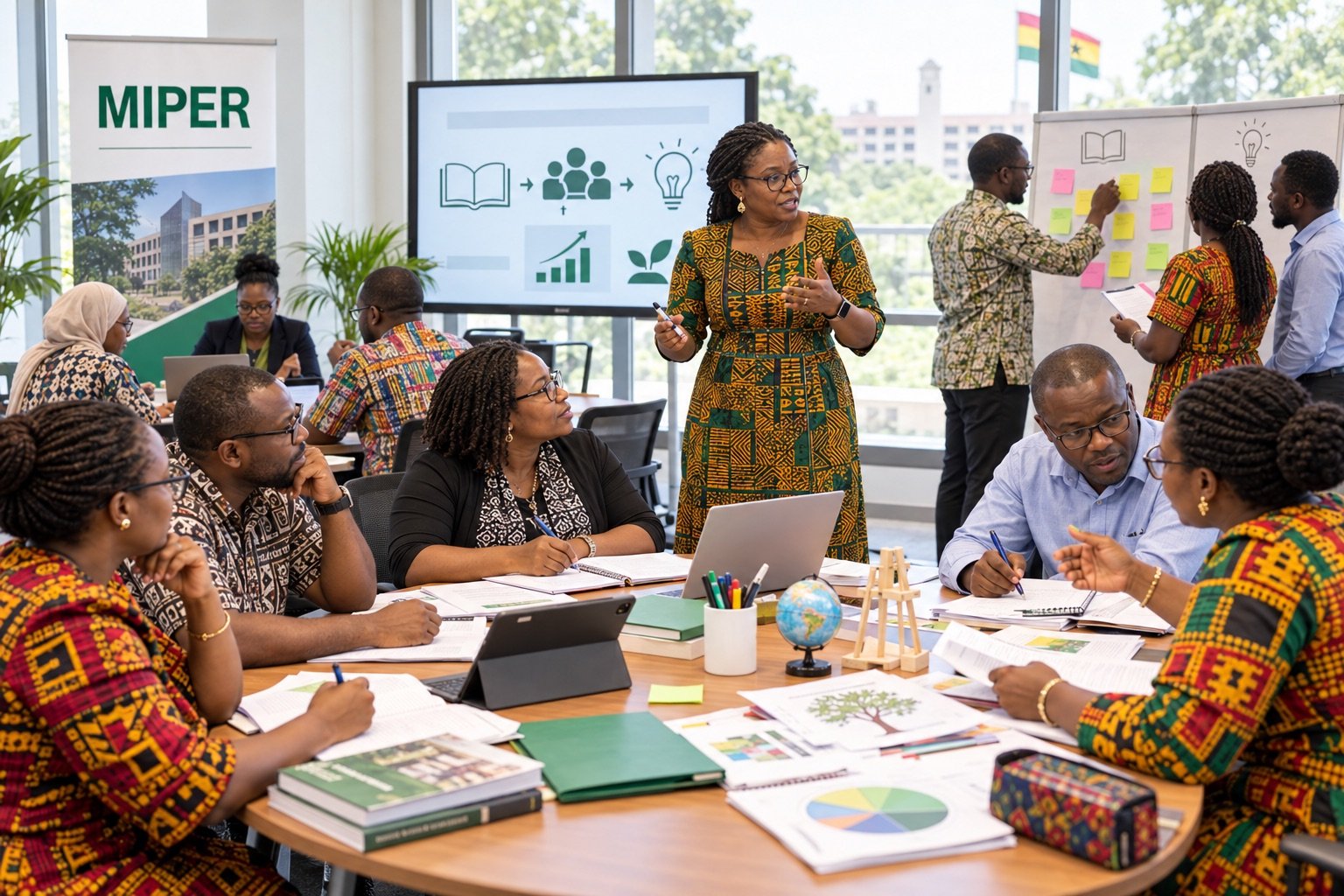
Our Origins
Our History
A Legacy of Excellence, A Vision for Transformation
The Mereku Institute for Policy and Educational Research (MIPER) was founded on a profound belief: that knowledge has the power to transform individuals, strengthen institutions, shape public policy, and advance sustainable development. Inspired by the enduring legacy of Professor Cosmas Worlanyo Kofi Mereku and Professor Damian Kofi Mereku, MIPER serves as a multidisciplinary platform dedicated to the pursuit of research, innovation, education, leadership, and social impact.
Founding, Establishment, and Registration
The vision for MIPER was conceived in 2016, driven by the recognition that complex societal challenges demand rigorous research, evidence-based policymaking, and collaborative problem-solving. Its founders envisioned an institution that would bridge the gap between knowledge generation and practical action, ensuring that research contributes meaningfully to development and societal progress.
MIPER was formally established in March, 2026 as an independent research, policy, and development institute committed to generating transformative ideas, fostering innovation, and supporting sustainable solutions to contemporary challenges.
The Institute was officially registered in August, 2026, providing the legal foundation for its operations and marking the beginning of a journey dedicated to excellence in research, education, policy engagement, and community development.
The Mereku Legacy: A Unified Foundation for MIPER
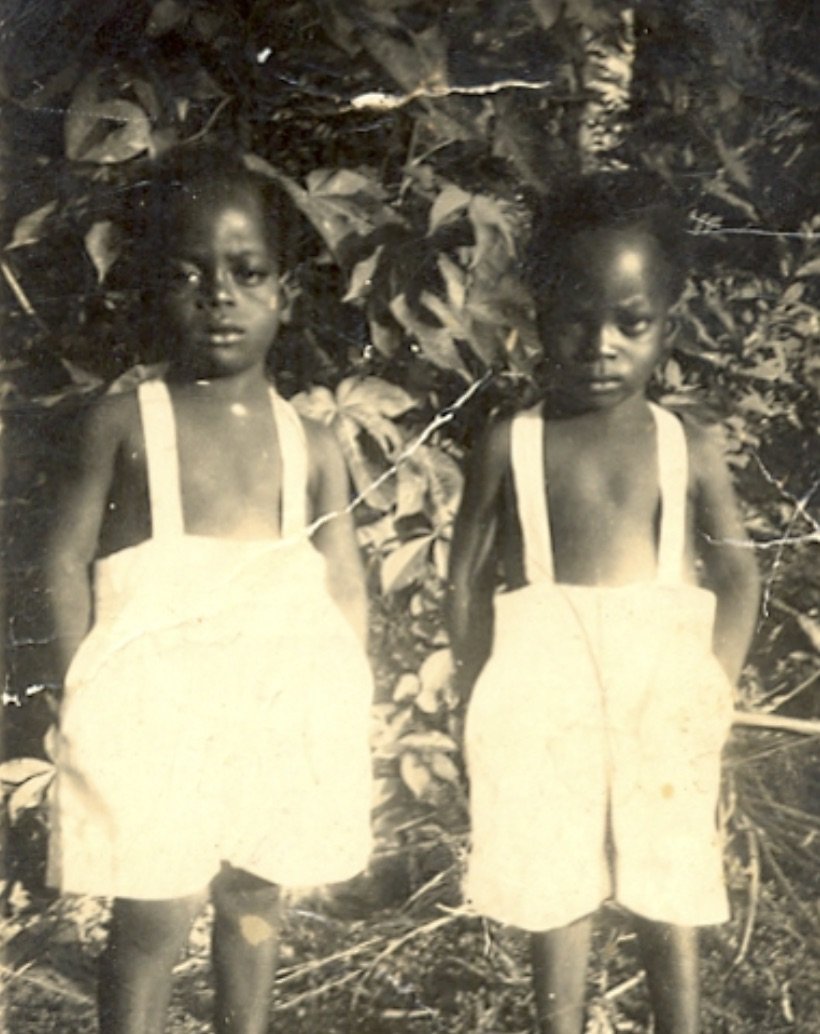
At the heart of MIPER is the shared legacy of twin brothers, Professor Cosmas Worlanyo Kofi Mereku and Professor Damian Kofi Mereku, two distinguished Ghanaian scholars whose careers have advanced education, culture, policy, research, and national development.
Though their disciplines took different forms, their life's work followed one common purpose: to use knowledge as a force for transforming society.
Professor Damian Kofi Mereku built an exceptional career in mathematics education, STEM, curriculum development, teacher education, assessment, and educational policy. Through his work with institutions such as NaCCA, T-TEL, USAID, DFID, the World Bank, and national examination systems, he helped shape the structures through which Ghana educates its young people. His leadership connected research to policy and policy to classroom practice.
Professor Cosmas W. K. Mereku brought the same spirit of excellence to music, creative arts, cultural education, curriculum innovation, and academic leadership. As a composer, researcher, curriculum specialist, and arts education leader, he strengthened Ghana's creative and cultural identity while advancing the place of music and the arts within formal education. His work with NaCCA, T-TEL, PASMAE, PATAG, and UEW helped position the creative arts as essential to national learning and African identity.
Together, the Mereku brothers represent two powerful dimensions of education:
the scientific and the creative, the analytical and the cultural, the technical and the human.
Their combined legacy shows that true education is not limited to one field. It is a complete formation of the mind, character, imagination, and capacity to serve. One brother helped strengthen the foundations of mathematics, STEM, assessment, and policy; the other elevated music, arts, culture, creativity, and identity. Both worked across universities, government agencies, teacher education systems, curriculum institutions, professional associations, and international networks.
MIPER is therefore born from the convergence of their journeys.
It stands as an institute committed to the same ideals that defined their lives: research excellence, curriculum transformation, teacher development, cultural relevance, innovation, public service, and African educational leadership. By drawing from Professor Damian Mereku's influence in mathematics and STEM education and Professor Cosmas Mereku's leadership in music, arts, and culture, MIPER unifies two legacies into one mission: to advance education that is intellectually rigorous, culturally grounded, practically relevant, and socially transformative.
The formation of MIPER honors the Mereku brothers not merely by preserving their names, but by continuing their work. It carries forward their belief that education must serve people, strengthen nations, and prepare Africa for a future shaped by both knowledge and creativity.
From Legacy to Institution
MIPER was established not merely as a tribute to two accomplished scholars, but as a living institution built upon the values that defined their life's work: excellence, integrity, innovation, leadership, evidence-based inquiry, cultural stewardship, and service.
The Institute recognizes that the most pressing challenges of our time transcend traditional disciplinary boundaries. Educational reform, governance, technological change, youth empowerment, cultural preservation, community development, and sustainable growth are deeply interconnected and require integrated solutions informed by sound research and thoughtful analysis.
Guided by this understanding, MIPER adopts an interdisciplinary approach that brings together researchers, educators, policymakers, innovators, development practitioners, and communities to generate knowledge and create meaningful change.
Advancing Knowledge, Shaping Impact
Since its inception, MIPER has been committed to transforming knowledge into action. Through research, policy analysis, advocacy, capacity building, monitoring and evaluation, strategic partnerships, and community engagement, the Institute seeks to address real-world challenges and contribute to practical, sustainable solutions.
The Institute's work spans a broad range of fields, including education, public policy, governance, innovation, technology, culture, youth development, leadership, community development, and social impact. Across these areas, MIPER remains committed to producing knowledge that is relevant, credible, actionable, and transformative.
Looking Ahead
Today, MIPER stands as a forward-looking institution dedicated to advancing excellence in research and public engagement. While firmly grounded in the rich legacy of the Mereku name, the Institute remains focused on the future, responding to emerging opportunities and challenges in an increasingly interconnected and rapidly changing world.
As societies continue to confront complex educational, social, economic, technological, and governance issues, MIPER seeks to serve as a trusted source of knowledge, innovation, and leadership. Through collaboration, evidence-based solutions, and a commitment to public service, the Institute strives to contribute meaningfully to national development, regional progress, and global conversations on sustainable development.
The history of MIPER is ultimately a story of vision, scholarship, and impact. It is a story inspired by a remarkable legacy and sustained by a commitment to ensuring that research serves humanity, informs policy, strengthens institutions, empowers communities, and creates opportunities for future generations.